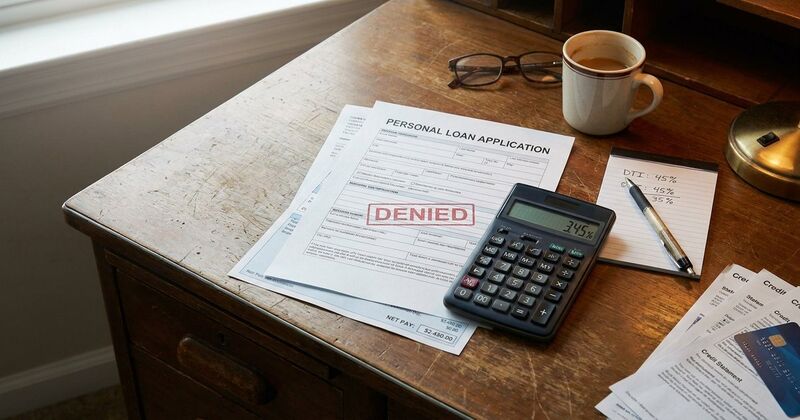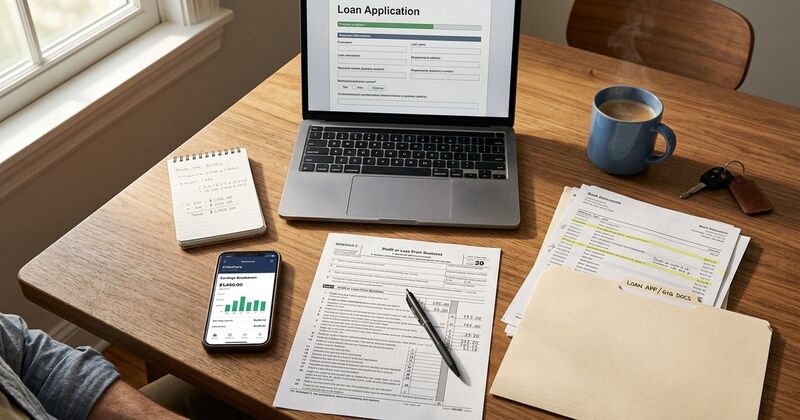


Quick answer: Pick a cosigner who could absorb the loan financially if you missed every payment, give them a printed one-page disclosure of what they are signing, hand them an explicit "no" exit, and run autopay plus monthly screenshots from day one. Most cosigner blow-ups trace back to vague terms and surprise late notices, both of which are fixable on paper before anyone signs.
Asking somebody to cosign a loan is one of the most awkward financial conversations there is. You already feel like you're failing because you can't qualify on your own. Now you have to walk up to your mom or your older brother or your favorite aunt and ask them to put their credit on the line for you. And if you screw it up (either the ask or the loan), you're going to feel it at every Thanksgiving for the next decade.
I've sat across the desk from hundreds of cosigners over the years. The ones who walked away clean had one thing in common: the borrower told them the truth, in writing, before anybody signed anything. The ones who ended up in court, or just stopped speaking to each other, didn't.
Let's do this the right way.
Before you ask anyone, understand what you're actually asking for
A cosigner takes on the same legal obligation as you. If you miss a payment, it shows up on their credit report. If you default, the lender can sue them for the full balance, plus interest, plus late fees, plus attorney's fees. According to the Federal Trade Commission, in many states the lender doesn't even have to come after you first. They can go straight to the cosigner.
Negative information from a cosigned loan stays on the cosigner's credit report for up to seven years. The cosigned debt also gets factored into their debt-to-income ratio, which can block them from getting a mortgage, a car loan, or even a new apartment, even if you've never missed a single payment.
Read that paragraph again. That is what you are asking for.
If you understand it, you're ready to have the conversation. If it makes you flinch, good. It should.
Cosigner versus co-borrower: the difference most applicants miss
Here's something almost nobody knows going in. Most major personal loan lenders (SoFi and LightStream, for example) do not accept traditional cosigners on personal loans. They allow co-borrowers, which sounds similar but is not the same animal.
A cosigner takes on the liability without taking ownership of the loan. They don't get the money. They just back you up.
A co-borrower is on the loan as an equal owner. Equal access to the funds, equal liability, equal everything. If your "cosigner" is really a co-borrower, the lender treats them as a 50/50 partner. They can refinance the loan without you. They can be sued. The bank statements get reported to both their credit and yours.
Before you have any conversation, call the lender and ask straight: do you accept cosigners, co-borrowers, or both? OneMain Financial and some bad-credit-leaning lenders do accept true cosigners. Most of the big online lenders only accept co-borrowers. The right answer changes the size of the favor you're asking for. (For why this distinction matters at the underwriting desk, see why a personal loan can get denied even with a steady job.)
Who to ask. And three people you should never ask.
The right cosigner is somebody who:
- Has a credit score of 700 or higher (most lenders want 670 minimum from a cosigner, and the better the score, the better your rate).
- Has a low debt-to-income ratio (under 40 percent, ideally lower).
- Has stable income that the lender can document.
- Knows you well enough to call you on your stuff if you start sliding.
- Can financially absorb the loan if you can't pay it. Not "would be inconvenienced." Could absorb it.
That last one is the test that matters. If your cosigner having to take over your payments would wreck them, you have not picked the right cosigner. You've picked the closest one.
Three people I'd think twice about asking, no matter how willing they seem:
- A grandparent on a fixed income. They have the credit. They don't have the runway to recover if something goes sideways. And they'll say yes because it's you. Don't make them.
- A romantic partner you're not married to. If the relationship ends, the loan doesn't. I have watched this destroy people. Twice this year alone.
- A friend who's also asking you for favors. Mixing financial leverage and friendship rarely ends with both intact.
The conversation script: actual words to use
Don't text this. Don't email it. Sit down with the person, in private, with a printed page of numbers in front of you. Eye contact matters. So does the fact that you brought paperwork.
Here's the opener I tell people to use, almost verbatim:
"I want to talk to you about something serious, and I want to give you complete permission to say no, no questions asked, and we never speak about it again. I'm trying to take out a loan for [reason]. I can't qualify on my own right now because [specific reason: my credit score is 612, my DTI is too high, I just changed jobs]. I've been working on it, and here's my plan to fix it. I'm asking you to consider cosigning. Before you answer, I want you to take this one-page handout home and read it tonight. Don't tell me yes or no right now. Take a couple of days. If the answer is no, that is genuinely fine and it doesn't change anything between us."
Then shut up. Let them read. Don't fill the silence.
Three things that opener does. It tells them you're not springing this on them. It gives them a graceful exit. And it puts the responsibility on you, not on their generosity.
The one-page handout to give your cosigner
Type this up. Print it. Hand it to them.
What I'm asking you to cosign:
- Loan amount: $X
- Term: X months
- Estimated monthly payment: $X
- Lender name and contact info
- What I'm using the money for (specific)
What this means for you legally and financially:
- You will be equally liable for the full balance if I miss a payment or default.
- This loan will appear on your credit reports at all three bureaus.
- Your debt-to-income ratio will increase by the full monthly payment.
- If I default, the lender can pursue you directly, including suing you and (with a court judgment) potentially garnishing your wages.
- Negative information stays on your credit report for up to seven years.
My plan to protect you:
- Autopay from my checking account on the [date]. You will get the screenshot every month.
- I will give you online read-only access to the loan account so you can verify payments any time.
- If I lose my job or get behind, I will tell you within 7 days. Not the day the lender calls you.
- I am setting aside [X months of payments] in a savings account before signing as a cushion.
- I will pursue cosigner release as soon as the lender allows it, if it's available.
The Federal Trade Commission's Credit Practices Rule actually requires the lender to give your cosigner a written notice of their obligations before they sign. Make sure they read it. That document is not optional. It exists because too many cosigners have been blindsided.
Five questions your cosigner should ask the lender
Encourage them to call the lender directly before signing. Their questions:
- What exactly happens if the primary borrower misses a payment? When am I notified?
- Is there a cosigner release option, and what are the requirements?
- Can I see the full loan agreement and amortization schedule before signing?
- Will this debt count against my own DTI when I apply for credit?
- If the borrower defaults, what's your collection process?
If the lender is squirrelly about answering any of those, that's information.
If they say no, how to keep the relationship intact
"No" is a real answer. You told them they could say it. Now you have to honor that. Don't make a face. Don't go quiet for a week. Say something like, "I really appreciate you considering it. That was the answer I told you was fine, and I meant it." And then drop it forever.
What you don't do is ask again in three months. You don't bring it up at family dinner. You don't make a passive comment about how you "had to take a higher rate." That's manipulation, and they'll feel it.
If the answer was no, the answer is no. Move to a different plan: a smaller loan, a credit-union loan, a secured loan, a 30-day credit sprint to lift your score, or just waiting. Our piece on the 30-day credit sprint covers what you can actually move in a month.
After the loan funds: monthly habits that protect both of you
Once the loan is in place, your job is simple. Make every payment on time. Set up autopay. Keep an emergency cushion that's at least two payments deep. Tell your cosigner immediately if anything changes (job loss, income drop, hospitalization). Late notice is how cosigners get blindsided and why families stop speaking.
Send them a screenshot every month. Yes, every month. It takes ten seconds. It builds trust. And it makes the relationship feel like a partnership, not a hostage situation.
Cosigner release: is it on the table for personal loans?
Cosigner release is common on private student loans (typically after 12 to 48 months of on-time payments) but rare on personal loans. Some lenders offer it, most don't. Read your loan agreement carefully. If release is available, it's usually conditioned on the primary borrower demonstrating an income, credit score, and DTI that would have qualified them alone.
The other path off the loan is a refinance. Once your credit has improved, refinance into a new loan in your name only and pay off the original. The cosigner is automatically off the hook. That's the cleanest exit, and the one I tell most people to plan for from day one.
Trust Point Loans is not a lender or broker. We don't approve, deny, or fund anything. We help borrowers think clearly before they sign their name (or someone else's) to a loan agreement.
Common questions about asking someone to cosign
Does cosigning a loan affect the cosigner's ability to get a mortgage?
Yes. The full monthly payment counts toward their debt-to-income ratio whether you've ever missed a payment or not. It can absolutely block them from a mortgage, even if the loan is current.
Can a cosigner be removed from a loan later?
Sometimes. Some loan agreements include a cosigner-release option after a certain number of consecutive on-time payments. Most personal loans don't. The reliable path is to refinance the loan into the primary borrower's name only.
What's the minimum credit score a cosigner needs?
Most lenders want 670 or higher, and 700+ is what gets you a meaningfully better rate. The cosigner's full file (income, DTI, payment history) matters as much as the score.
Can a cosigner be sued before the primary borrower?
In many states, yes. The Federal Trade Commission notes that lenders are not required to pursue the primary borrower first. They can go after whoever is easier to collect from.
Is a cosigner the same as a co-borrower?
No. A co-borrower has equal ownership of the loan and equal access to the funds. A cosigner has equal liability but no ownership. Many large personal loan lenders only allow co-borrowers, not true cosigners. Verify with the lender before you ask anyone.
What happens to a cosigned loan if the primary borrower files bankruptcy?
Generally, the borrower's bankruptcy doesn't wipe the debt off the cosigner. The lender can still come after the cosigner for the full balance. This is why "I'll just file if it gets bad" is not an exit plan.