

Somebody told you that applying for a personal loan tanks your credit, and ever since you've been afraid to click anything. So you've been staring at the same lender's website for three days, refreshing the page, wondering if checking your rate is going to undo two years of careful credit-building.
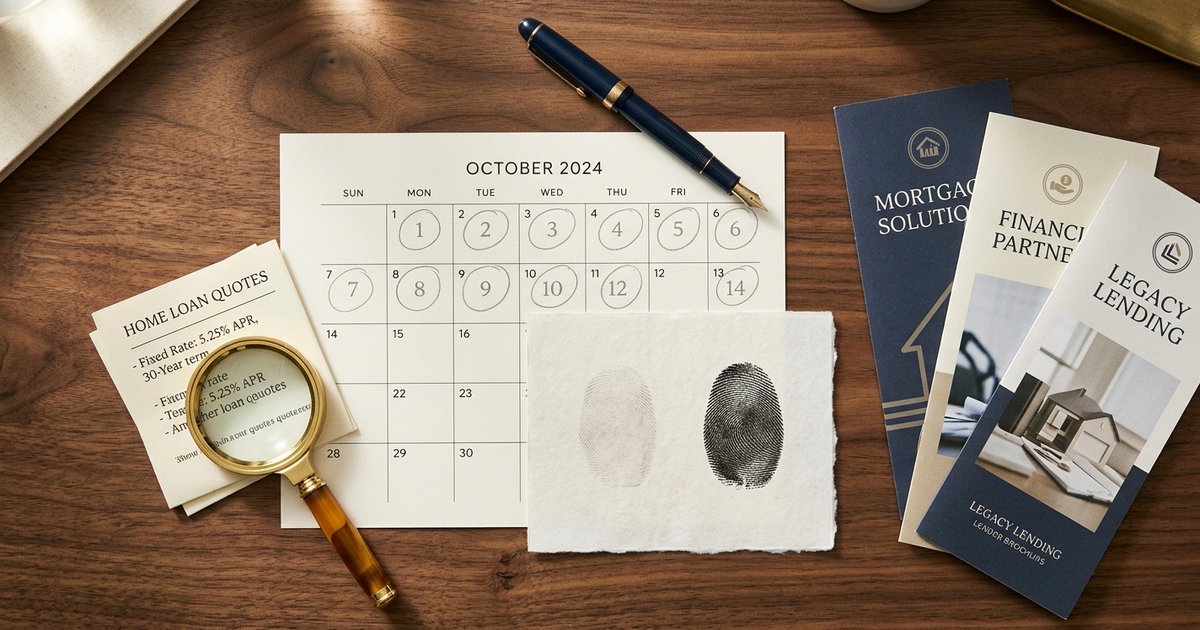
Good news: the rumor is mostly wrong. Better news: there's a 14-day shopping window built right into the scoring system that lets you check rates at multiple lenders without the inquiries piling up against you. The not-so-great news: most online articles tell you that window is 45 days, and for personal loans specifically, that's not true.
So let me walk you through what actually happens to your score when you shop for a personal loan, where the line between safe and risky sits, and how to put together a 14-day plan you can run without flinching.
The myth: "applying for a loan hurts your credit"
It's almost true, which is why it sticks. Submitting a formal application does trigger a hard credit pull, and a hard pull does temporarily lower your score. But two things make the rumor misleading.
First, checking your rate (called prequalification at most lenders) usually does not. That's a soft pull, and soft pulls don't affect your score at all.
Second, even when you do submit formal applications, the scoring models are designed to recognize that you're shopping for one loan, not opening five. They bundle multiple inquiries together within a defined window, so you're penalized once instead of five times. The catch is that the rules are different depending on which scoring model the lender is using and what kind of loan you're shopping for. Our piece on how online personal loan underwriting works covers what the lender does with your file once you do click submit.
What a soft pull actually is
A soft pull (or soft inquiry) happens when a lender pulls a piece of your credit data without you formally applying for credit. It might be:
- You checking your own credit score
- A lender pre-screening you for a "you're pre-approved" mailer (these are technically firm offers of credit under FCRA section 604(c))
- A lender giving you a personalized rate quote when you "check your rate" or "see if you prequalify" on their site
- Your existing card issuer reviewing your file for a credit limit increase
The CFPB confirms that soft inquiries don't affect your score. They show up on your credit report when you pull it yourself, but lenders generally don't see them.
Here's the practical version. You go to a major fintech, type in your name, address, income, last four of your Social Security number, and the loan amount you want. They run a soft pull, show you a personalized rate, and you can walk away with no impact on your score. That's the prequalification step.
The exact moment a soft pull becomes a hard pull
This is the part most people don't see coming. Prequalification is soft. Submitting the actual application is hard. The transition happens at a specific moment, and lenders are required to disclose it.
When you go from "see your rate" to "yes, I want this loan, please send me the money," the lender presents a Truth in Lending Act (TILA) disclosure screen with the final terms. (Our piece on how to read the TILA disclosure box walks that screen line by line.) You consent to a hard credit pull at that moment. Click yes, and a hard inquiry posts to your credit report.
So the question is not "will checking my rate hurt my credit." The question is "at which click do I stop being in shopping mode and start being in commit mode?" The answer is: when you accept the offer.
One nuance worth knowing. Some lenders require a hard pull at prequalification, even though the industry standard is soft. The lender's disclosures will tell you. If a lender doesn't say "no impact to your credit score" at the rate-check step, assume it's a hard pull and ask before you submit anything.
The FICO rule: 45-day window, but only for some loans
Here's the rule most articles get wrong. FICO does have a rate-shopping grace period, but it doesn't apply to personal loans.
According to myFICO's own consumer education, older FICO models give you a 14-day window for shopping, and FICO 8, 9, 10, and 10T extend that to 45 days. Within the window, multiple hard inquiries for the same type of loan count as one for scoring purposes. But the window only applies to mortgage, auto, and student loan inquiries. Personal loan inquiries are not bundled.
That means if you submit five formal personal loan applications in 30 days under FICO scoring, you can pick up five separate hard inquiries on your report, each potentially shaving a few points off your score. A single hard inquiry typically costs less than five points and the score impact fades within 12 months (though the inquiry itself stays on your report for two years), but five of them stacked together is enough to notice.
This is the fact buried in the small print of FICO's own education page, and it's the reason "I have 45 days to shop" is a costly assumption when you're shopping for a personal loan specifically.
The VantageScore 4.0 rule: a 14-day window that does cover personal loans
VantageScore 4.0, the scoring model used by Credit Karma and a growing number of fintech underwriters, takes a different approach. Per VantageScore's own documentation, it deduplicates hard inquiries across all account types within a 14-day window, except for retail, collection, and utility inquiries.
Translation: under VantageScore 4.0, multiple personal loan and credit card inquiries within 14 days count as one. So if you submit four personal loan applications in 12 days, VantageScore treats them as a single inquiry. This is why your Credit Karma score can look stable while your FICO score drops after a personal loan shopping spree (a confusion you'll see all over r/personalfinance).
One important wrinkle. Mortgage underwriting still primarily relies on classic FICO models, not VantageScore 4.0. So if you're shopping for a mortgage, the FICO window is what matters. For personal loans specifically, both models matter because lenders use different scoring approaches.
Why both rules matter at the same time
Different lenders pull different scores. Some pull FICO 8, some pull FICO 9, some pull VantageScore 4.0, some pull a custom proprietary score that blends multiple sources. You don't always know which one a given lender uses, and you can't control it.
The practical implication: if you assume the most conservative window (14 days for personal loans, since that's both the older FICO window and the VantageScore 4.0 window), you minimize damage across all scoring models. Compress your shopping into 14 days and you're protected almost no matter who pulls what.
The 14-day shopping plan you can run without flinching
Here's what a clean rate-shopping run looks like:
- Days 1 to 3: prequalify (soft pull) at three to five lenders. Cast a wide net. Use lenders that explicitly say "no impact to your credit" at the rate-check step. Most of the major fintechs (SoFi, Upstart, LightStream, Best Egg, LendingClub, Marcus successors, Discover) qualify. Note the rate, term, monthly payment, total of payments, and origination fee for each.
- Days 4 to 7: narrow to two or three. Pick the offers that look best on total dollars repaid (the only number that captures rate, term, and fees together, see our five personal loan numbers framework). Read the TILA disclosure on each.
- Days 8 to 14: submit formal applications at the top one to three lenders. Each will run a hard pull, but because they all land within the 14-day window, VantageScore 4.0 bundles them, and older FICO models also bundle hard inquiries within a 14-day window. Newer FICO models will count personal loan inquiries individually, but each one typically costs fewer than five points and you're getting it over with in one stretch.
- Day 15: accept one, decline the others. Walk away with the funded loan and your shopping closed.
If you stretch shopping over 60 to 90 days, you accumulate inquiries without the bundling protection, and the score impact compounds.
When over-shopping actually does hurt
The 14-day window is forgiving, but it's not infinite forgiveness. Patterns that do hurt:
- 10 or more hard inquiries in 60 days, especially across different product types (a personal loan, plus a car loan, plus three credit cards)
- Inquiries spread out over months, where no single window catches them
- Inquiries combined with new account openings, which compound the score drop
- Inquiries on a thin credit file (fewer than five accounts total). Thin files take a larger per-inquiry hit than thick ones.
When under-shopping costs more than over-shopping
Here's the part nobody talks about. The score impact of one extra inquiry is usually fewer than five points, fades within a year, and falls off your report after two. The dollar impact of skipping a lender that would have given you a better rate? Real, immediate, and lasts the full term of the loan.
Bankrate's monthly tracking has shown personal loan APR variance of 5 to 10 percentage points across lenders for the same applicant profile. On a $15,000 loan at a 48-month term, going from 18% APR to 13% APR saves you roughly $2,300 in interest. That dwarfs whatever short-term scoring impact you'd take from prequalifying at one extra lender. Don't let inquiry anxiety cost you four figures. Our piece on why two lenders quote you wildly different APRs on the same day shows just how wide the spread can run.
What about denials?
Forum posts often blame denials for score drops ("I got declined and my score fell 30 points"). The denial itself isn't reported to the credit bureaus, so it doesn't directly affect your score. The score drop is from the hard inquiry plus, sometimes, a recalculation of risk based on a fresh-application file change.
If you got denied, the lender owes you an adverse action notice (under Regulation B) explaining why. Read it. Sometimes the reason is fixable in 30 days (a high credit card balance you can pay down, an error you can dispute), and your next application has a real shot. Our piece on your rights when a lender denies you walks the letter.
One last note. Trust Point Loans isn't a lender. Lender disclosures vary, so always confirm at the lender's actual application screen whether your rate-check is a soft pull or a hard pull. The TILA disclosure box is the document that tells you the truth, not the marketing page.
Frequently Asked Questions
Does checking personal loan rates hurt my credit?
Usually no. Most major lenders use a soft credit pull at the rate-check stage, which does not affect your credit score. The hard pull happens when you formally accept and submit the application.
How many points does one hard inquiry cost?
According to myFICO, typically fewer than five points, and the impact fades within 12 months. Inquiries themselves remain on your credit report for two years. Thin credit files (fewer than five accounts) tend to take larger per-inquiry hits than thick ones.
Does FICO's 45-day rate-shopping window apply to personal loans?
No. Per myFICO, the 45-day window in FICO 8, 9, 10, and 10T applies only to mortgage, auto, and student loan inquiries. Personal loan inquiries are not bundled by newer FICO models, which is why the 14-day VantageScore 4.0 window matters more for personal loan shopping.
Can I prequalify at multiple lenders without hurting my score?
Yes, as long as each lender uses a soft pull at the prequalification step. Most major fintech lenders do. Soft pulls don't affect your score at all, no matter how many you accumulate.
Why did my Credit Karma score not change but my FICO did?
Credit Karma uses VantageScore, while most personal loan lenders use FICO. The two models weight inquiries differently, and VantageScore 4.0 has a broader 14-day deduplication window than newer FICO models do for personal loans.
How long should my entire personal loan shopping window last?
Aim for 14 days from first hard inquiry to last. That window is conservative across both FICO and VantageScore 4.0 models. Prequalification (soft pulls) before that window costs nothing, so use it freely to narrow your list.